Earlier Work · Hardware · Health
A wearable to slow neuromuscular decline in Parkinson's patients.
Built for the Jacobs Design Competition: a wearable device, paired companion app, and exercise protocol designed to help Parkinson's patients maintain neuromuscular function. Took the project from ideation through working prototype.

Context
Parkinson's disease progresses, in part, through the loss of fine motor control and small repetitive movements that the body would otherwise rehearse automatically. Targeted exercise can slow that loss — but the patients who most need it are the ones least likely to maintain a daily exercise habit alone.
Research
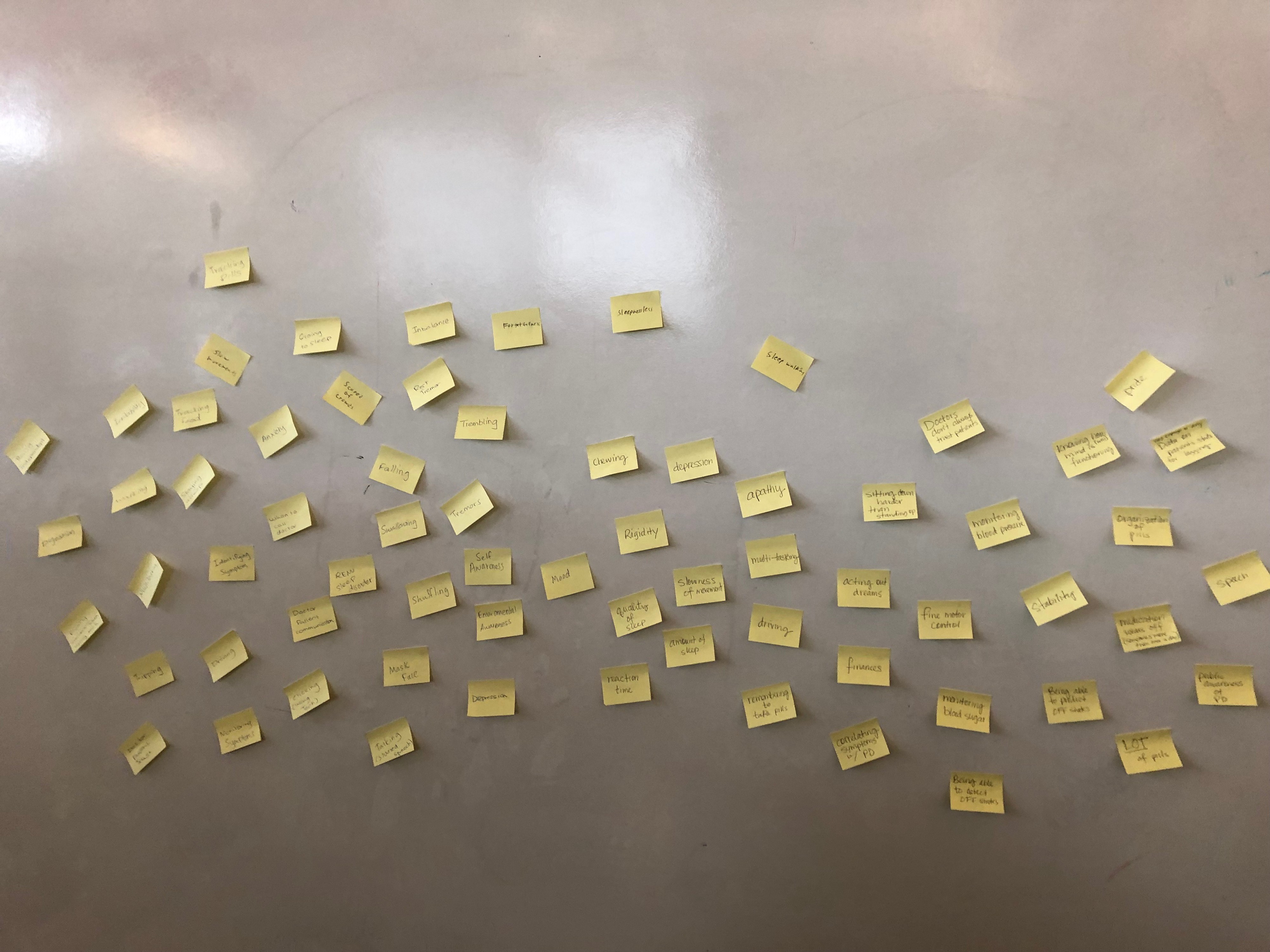
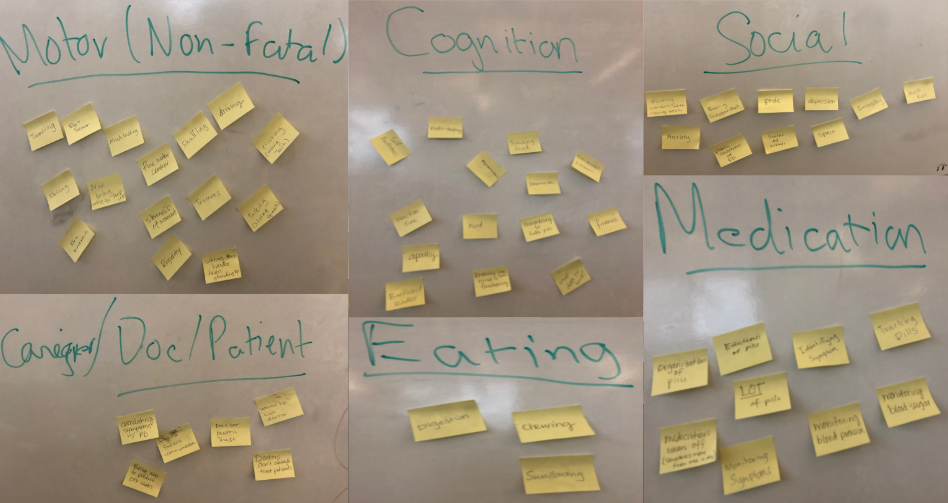
We started with interviews across the Parkinson's ecosystem — patients, spousal caregivers, certified nurses, and physicians — then mapped findings into an affinity diagram to find the pattern. Then we narrowed to three problem spaces: stability, data collection, and sleep.
Field research at BoxFit
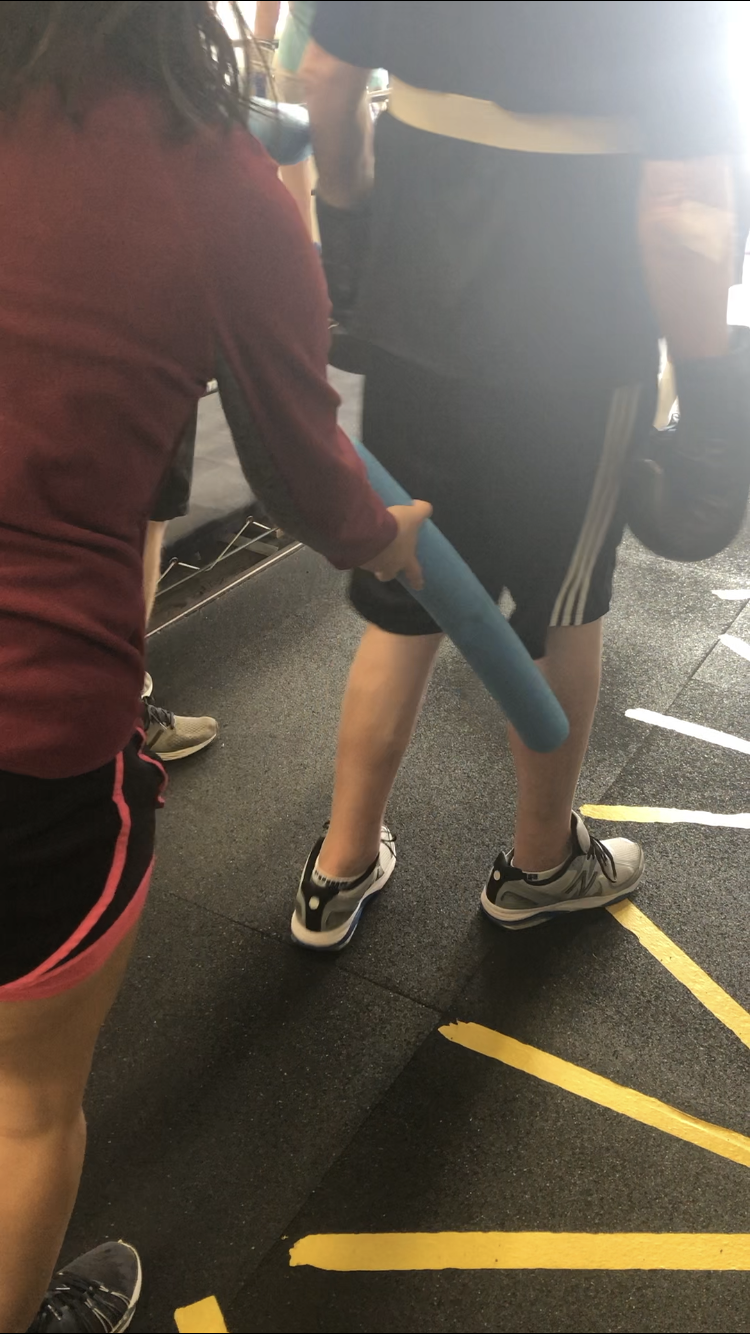
To validate our assumptions we visited BoxFit, a boxing gym specifically programmed for Parkinson's patients. The session surfaced five things the gym was doing well that our product would need to absorb: visual cues, auditory cues, haptic cues, multitasking to maintain cognition, and verbal exercises to fight voice loss.
The most consequential finding: exercise demonstrably slows the progression of neuromuscular deterioration in Parkinson's patients. That single insight became our problem framing — we needed to design for patients who can't make it to a class but still want to exercise at home.

Personas and prototyping
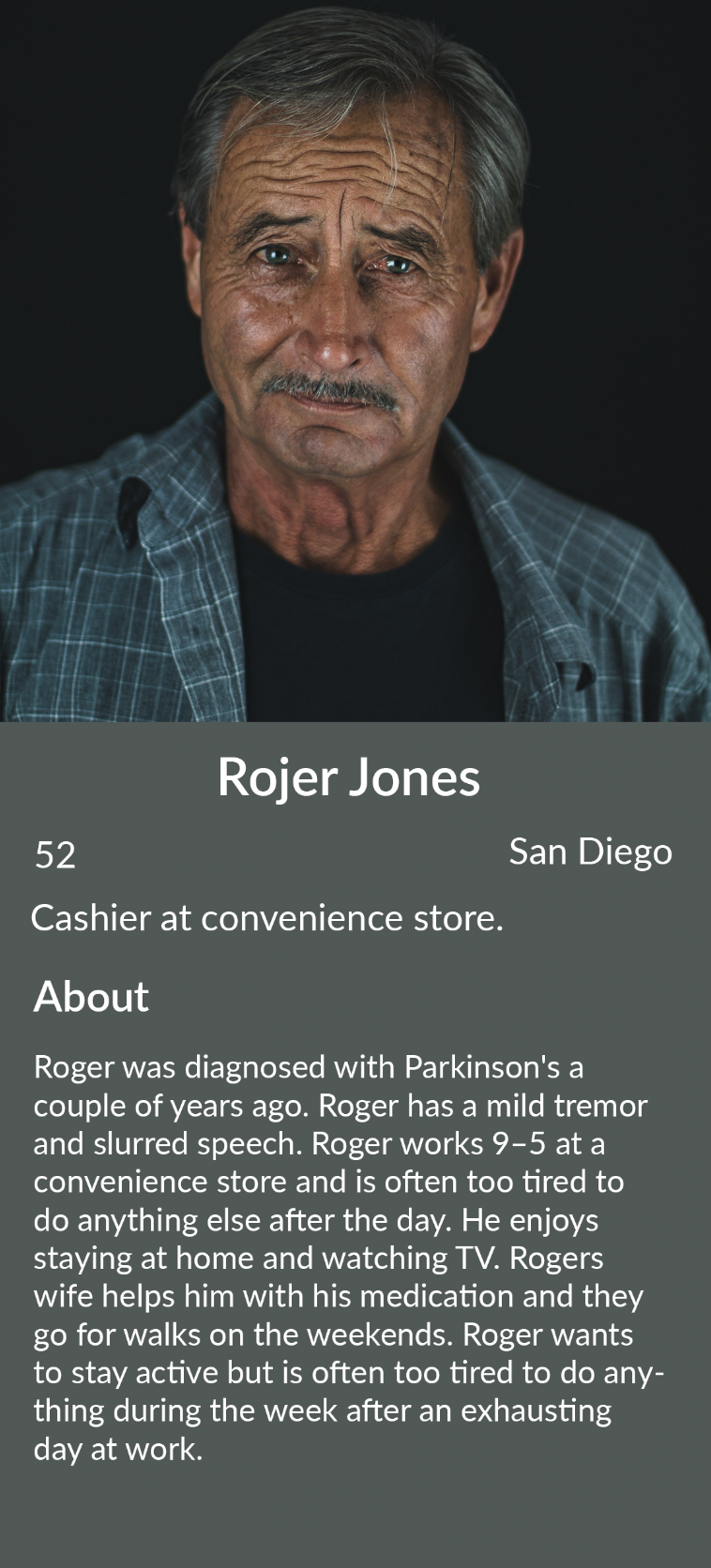
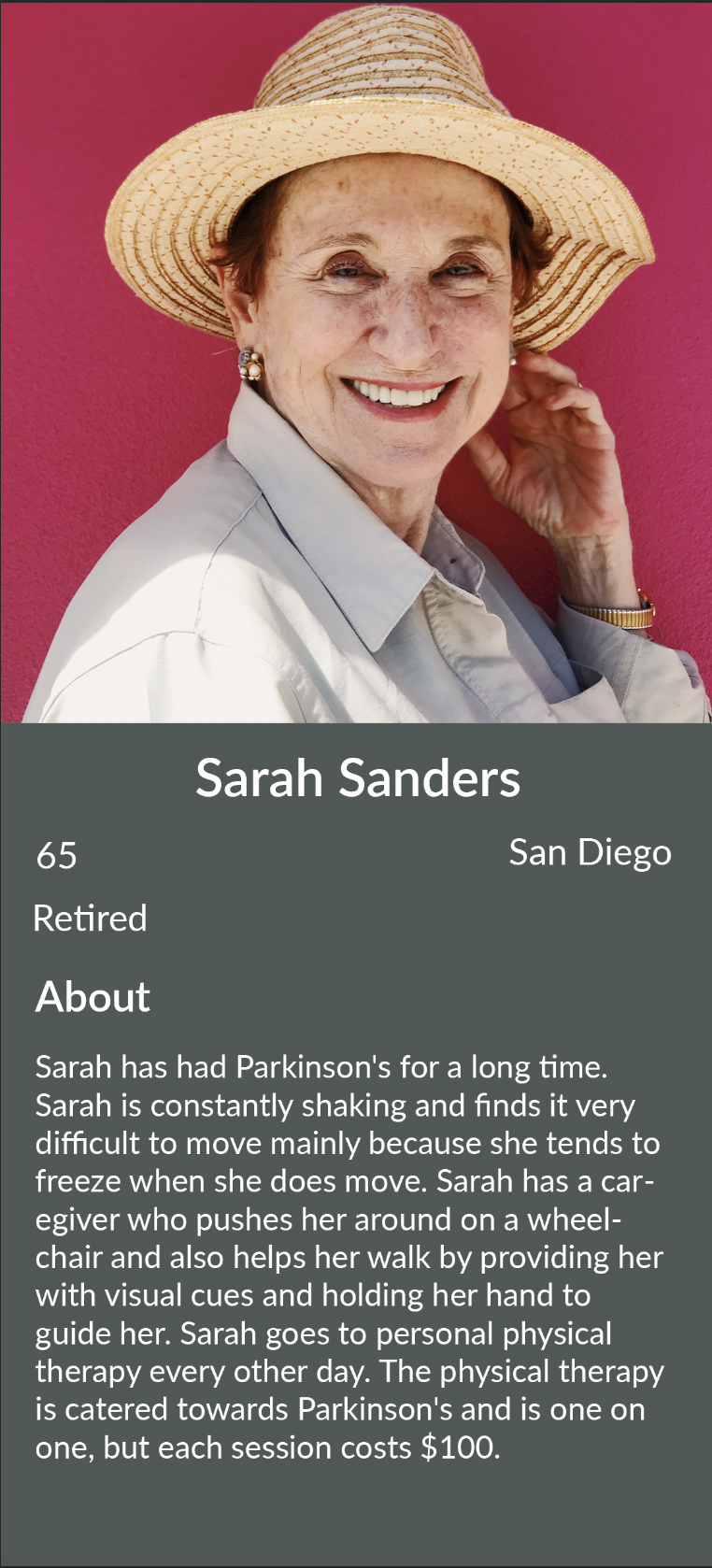
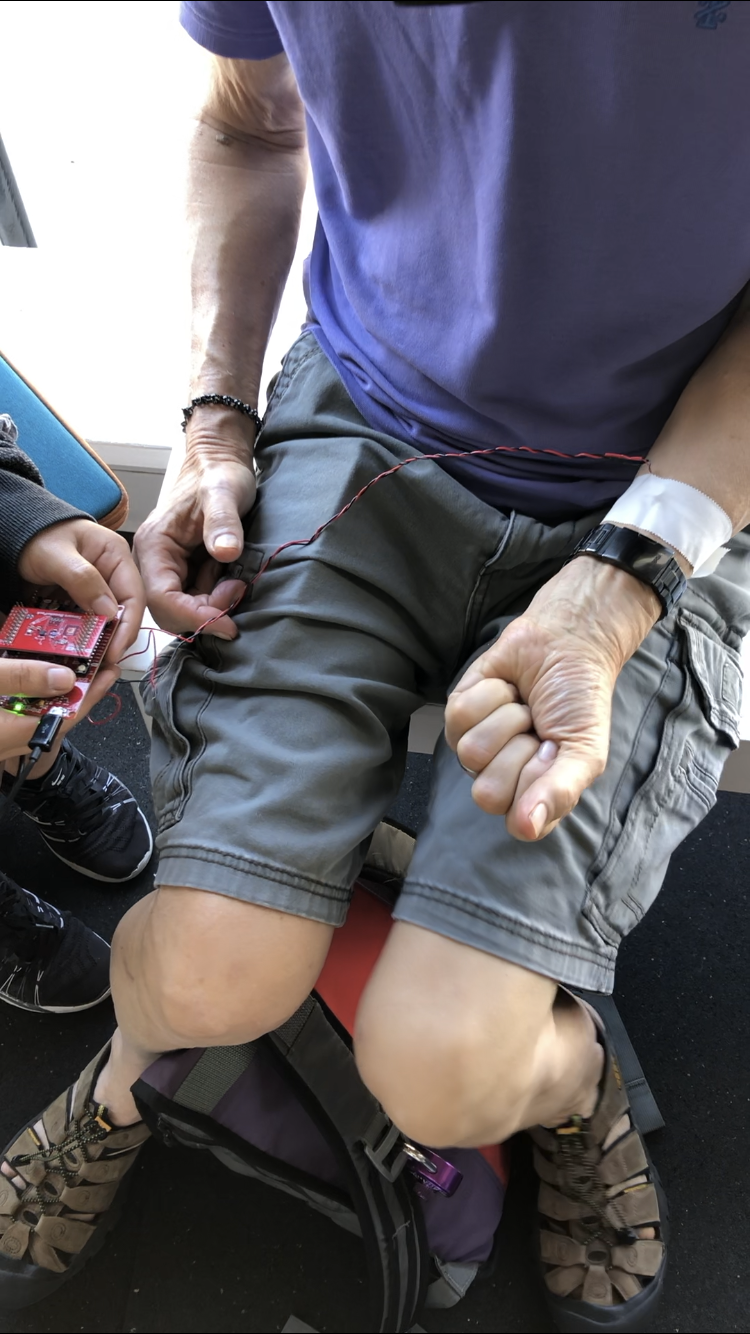
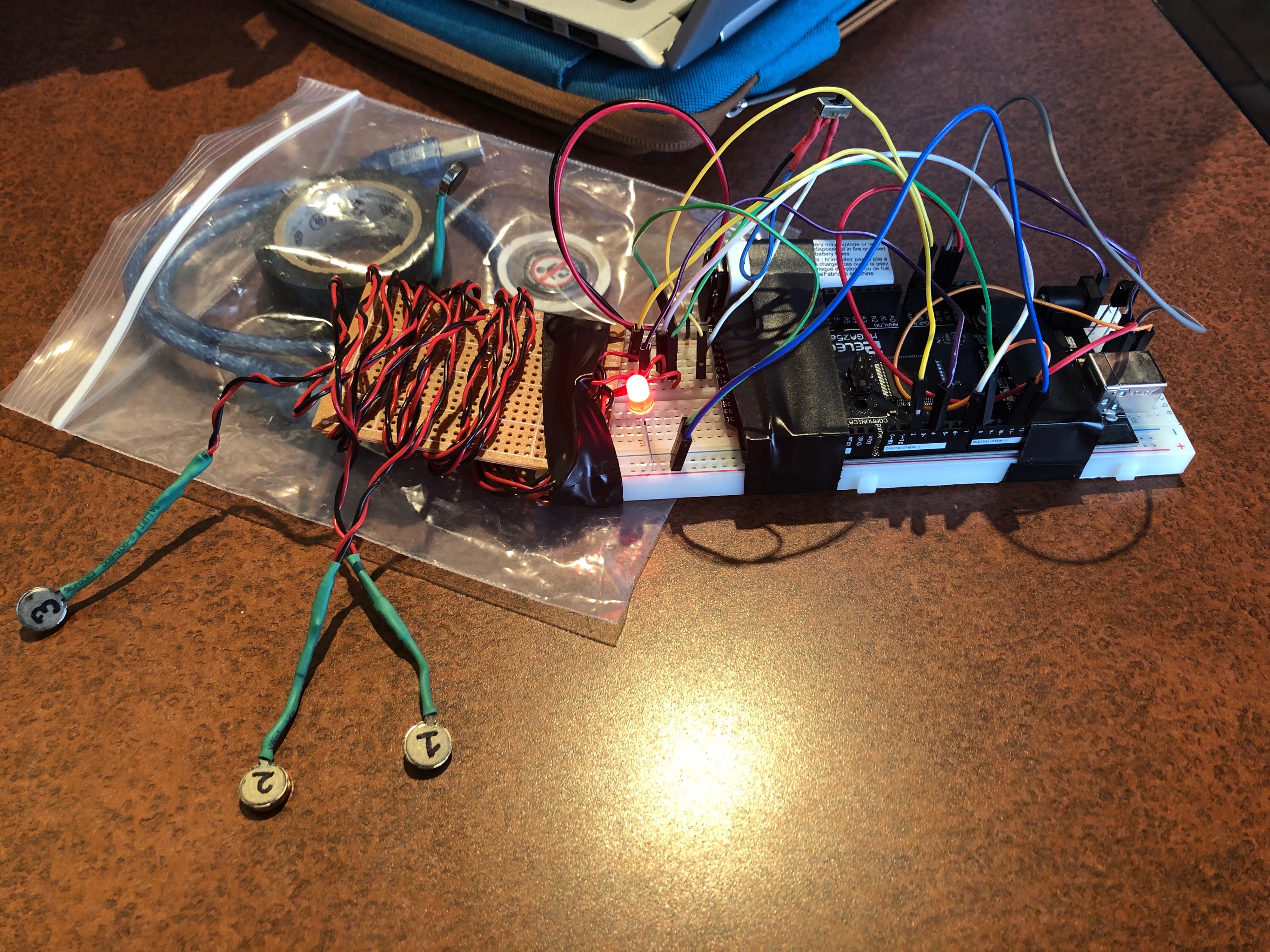
We built personas around moderate-to-severe Parkinson's patients, then iterated through three prototypes — lo-fi (pool noodles and vocal cues as cue stand-ins), hi-fi v1 (motors on legs/arms with timed vibrations and audio), and hi-fi v2 (motors on the specific muscles required for a movement).
What shipped
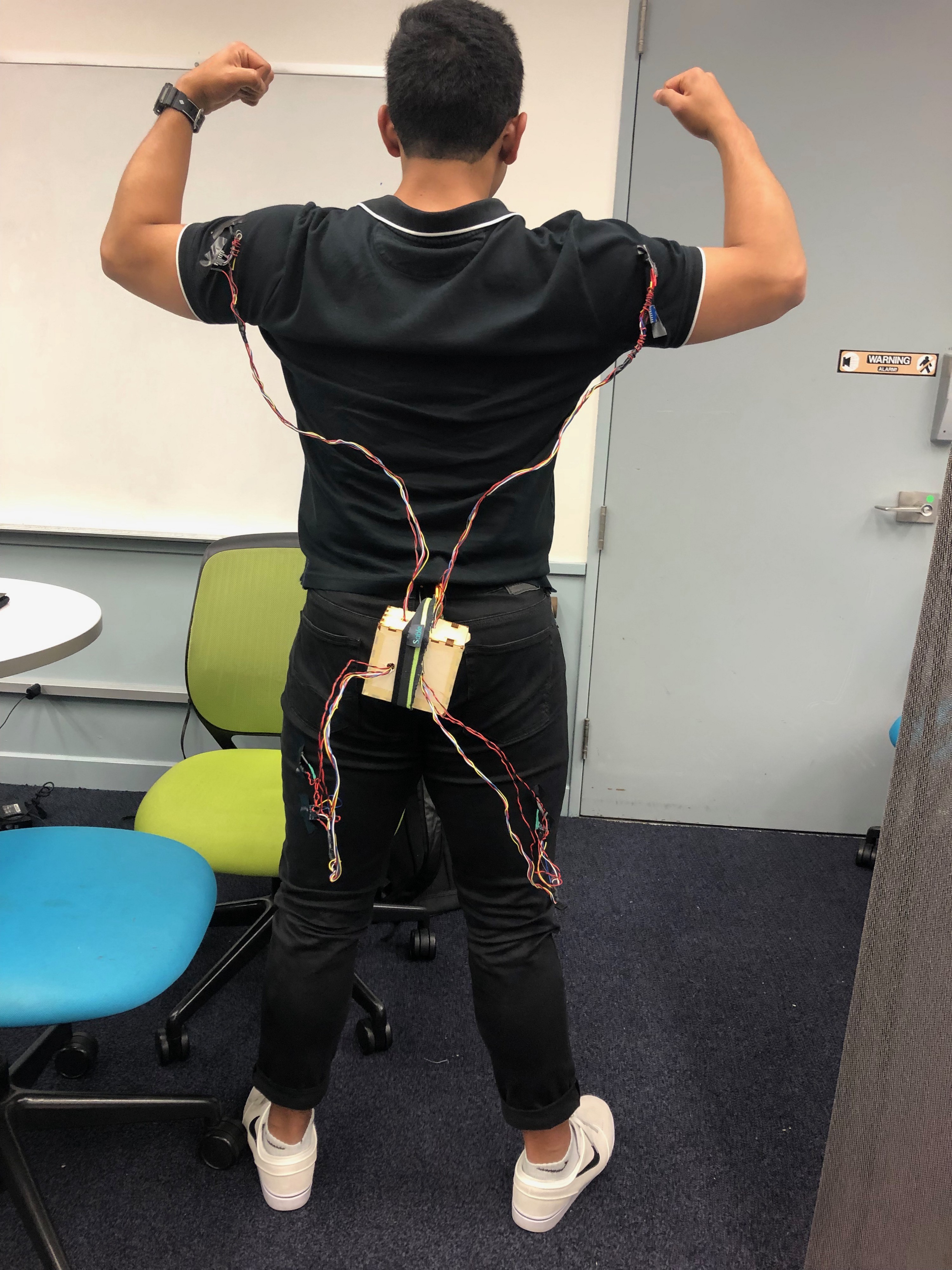
The final implementation: 6 motors and 4 sensors (gyroscope + accelerometer), with audio playback driven by a web app containing custom exercise modules. The microcontroller bridges the app and the body. A patient logs in, picks a module, places the motors per the tutorial, calibrates, and starts. The motors stimulate the appropriate muscles for each movement, audio cues the next action, and the gyroscope verifies whether the action was completed correctly. The app summarizes adherence and progress over time.
What I learned
This is the project where I learned that designing for a clinical population is a different sport than designing for a consumer one. Edge cases that a consumer designer can defer — tremor in the hands operating the device, cognitive fatigue, caregivers as a secondary user — are the primary design surface for a product like this. That recalibration of what counts as the "happy path" still informs how I scope research at Owaves.