Case Study · Social · 0 → 1
Building Collabs from concept to launch with a four-person design team.
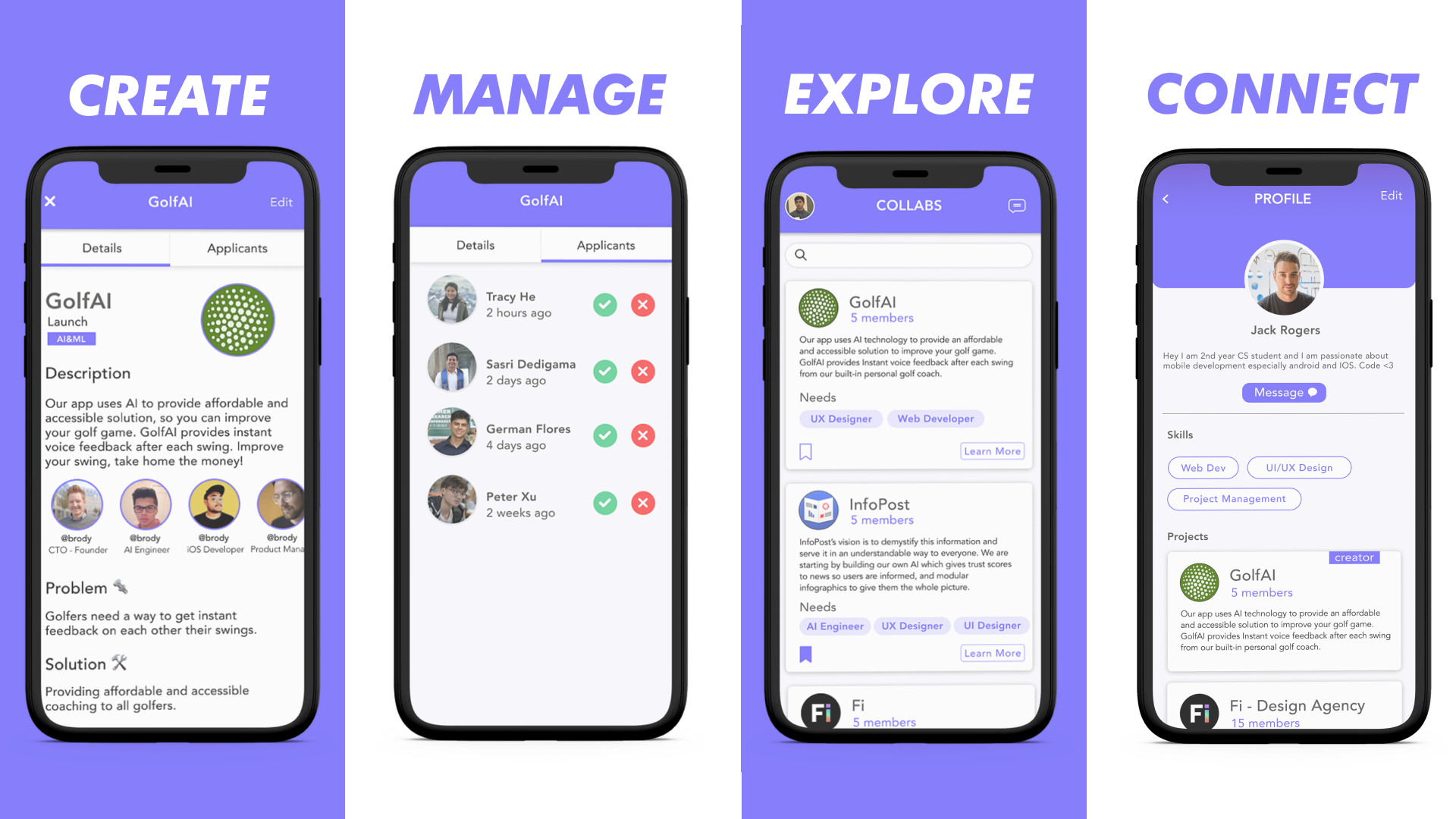
Collabs was a social platform helping college students get real-world project experience that would translate into internships and full-time roles. As lead designer I owned the design strategy, managed a team of four, and built the component framework that let us ship V1 with a small engineering team.
Context
Most college students hit graduation with résumés full of coursework and empty of evidence. Internships, the canonical bridge, are competitive enough that the students who most need them often can't get them. Collabs proposed a different bridge: a social platform where students could find collaborators, work on real projects together, and build a portfolio of artifacts that hiring managers actually cared about.
The hard call
The product had two distinct user types — people seeking collaborators and people offering project briefs — and a classic two-sided marketplace problem. The temptation was to build for both at once and end up with a generic experience that served neither well. I argued that V1 should optimize aggressively for the project-seeker side; the brief-poster side could be served by a thinner experience until we had liquidity.
Designed a single, high-fidelity seeker experience first; brief-poster surfaces shipped as a stripped-down companion flow. This let the small engineering team ship a real V1 instead of half-finished both sides.
Leading a team of four
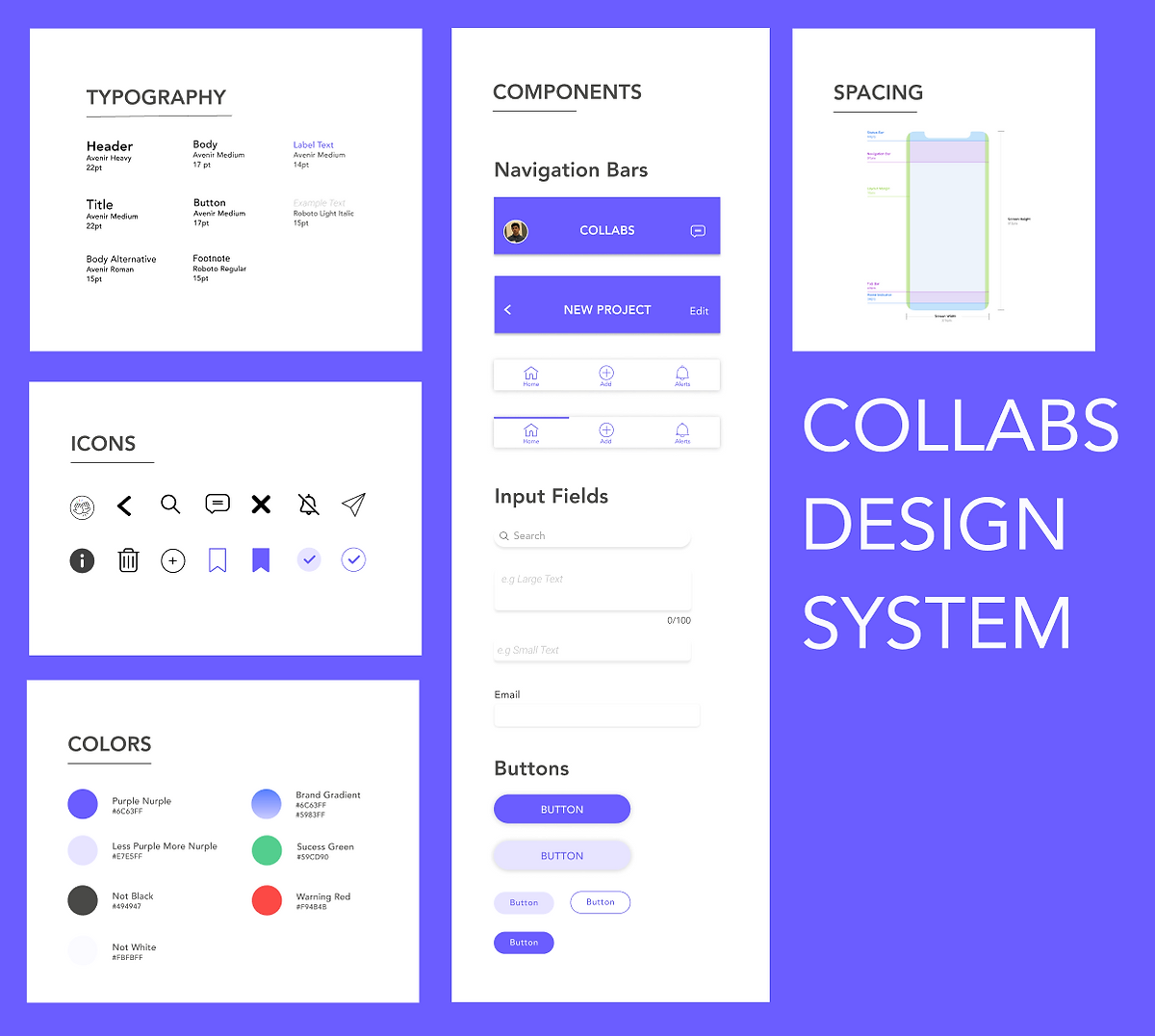
This was my first time managing other designers. I learned the obvious lesson hard: my job stopped being to design every screen and started being to make sure four people designing different screens produced a coherent product. That meant building a multi-level component framework early — colors, typography, primitive components, composed components, screen-level templates — so the team could parallelize without diverging.
How the work ran
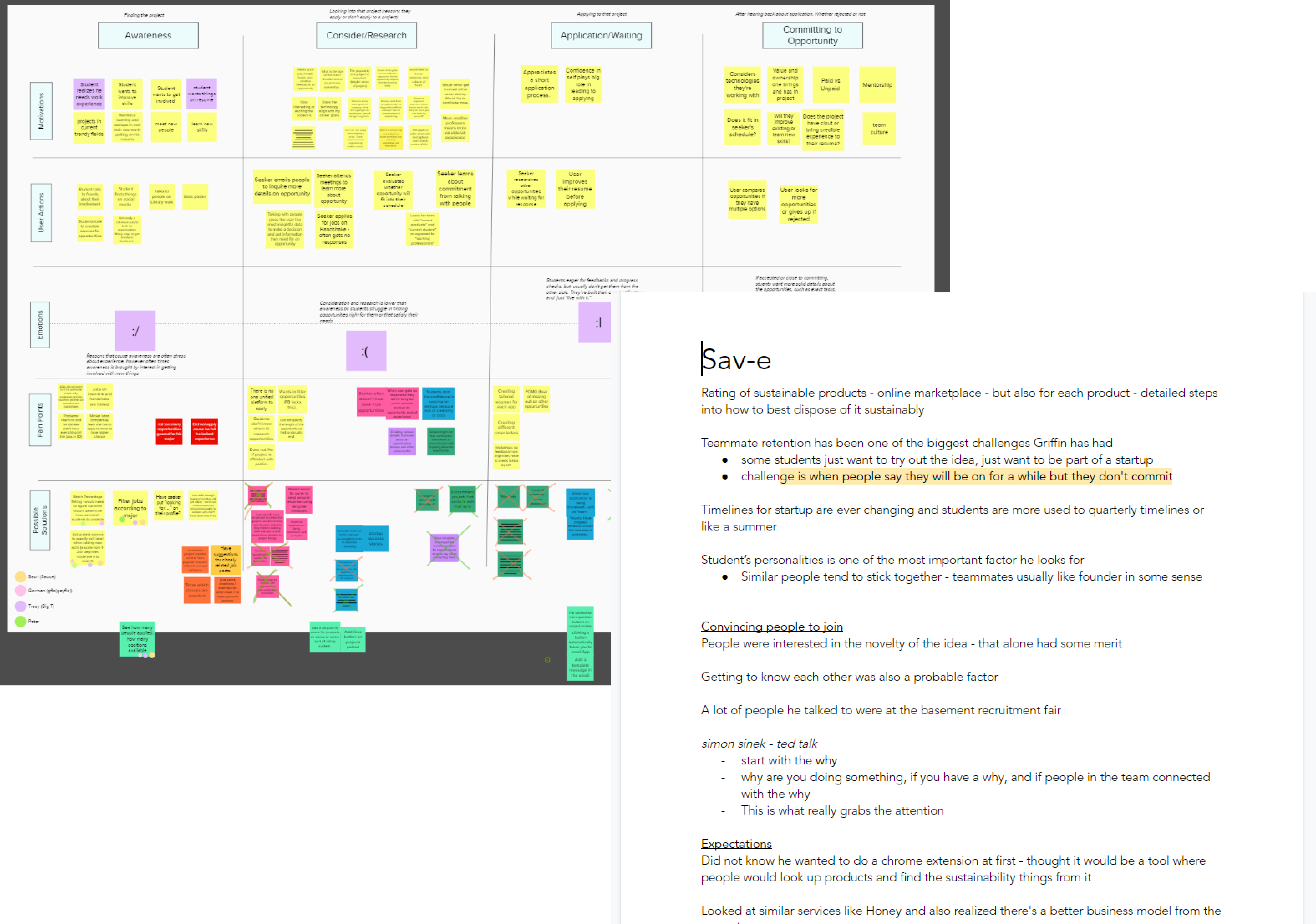
We started with a 126-person student survey at UCSD and 12 follow-up user interviews to validate the problem. Two distinct user types emerged: project creators needing to find collaborators and manage applicants, and project seekers needing a faster way to discover and apply to projects.
Competitive landscape
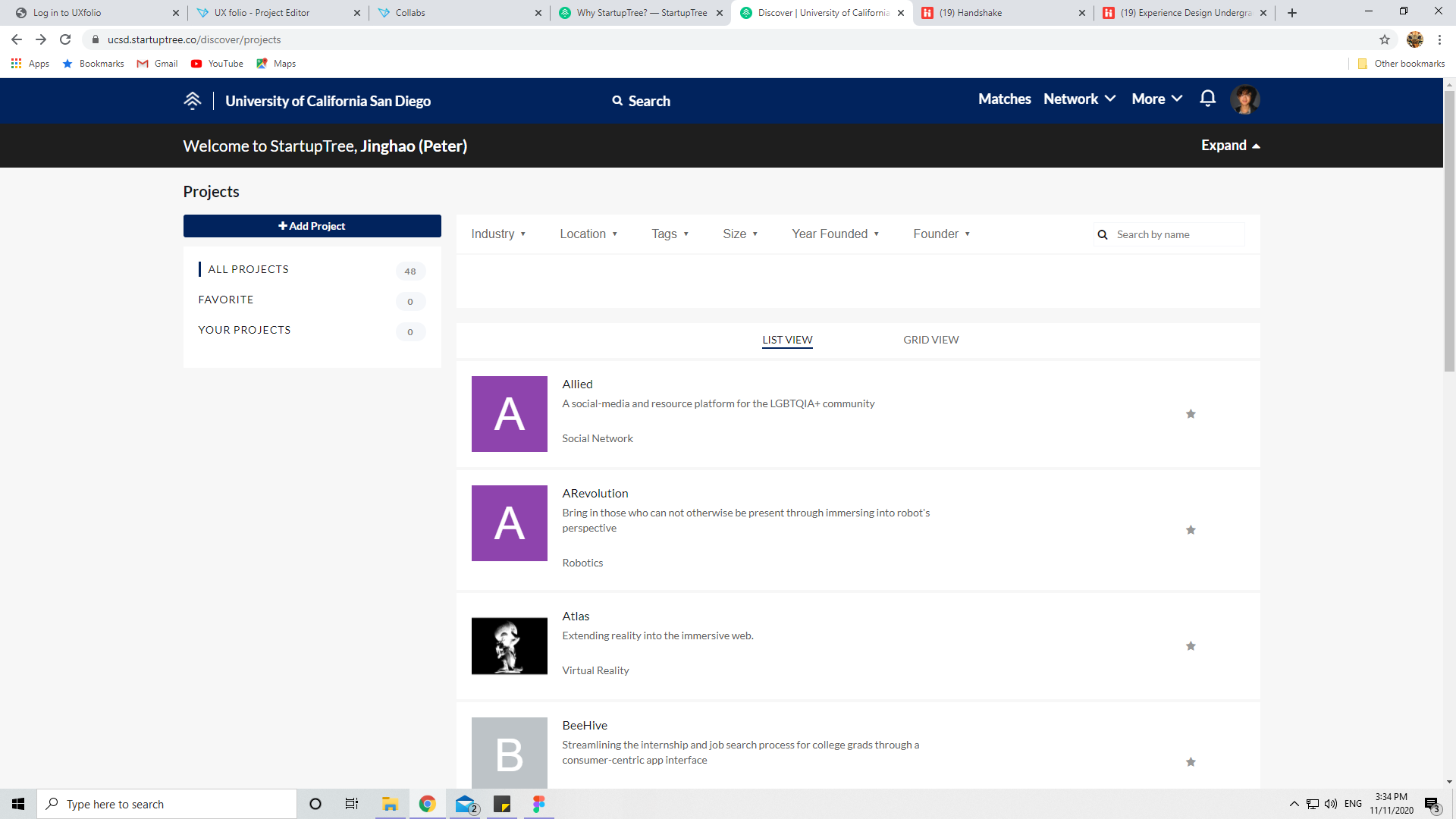
We mapped Collabs against the two most relevant adjacents — Startup Tree (a direct but narrow competitor focused on tech) and Handshake (a recruiting platform with no creator side). Neither solved the specific gap we were going after.

From flows to hi-fidelity
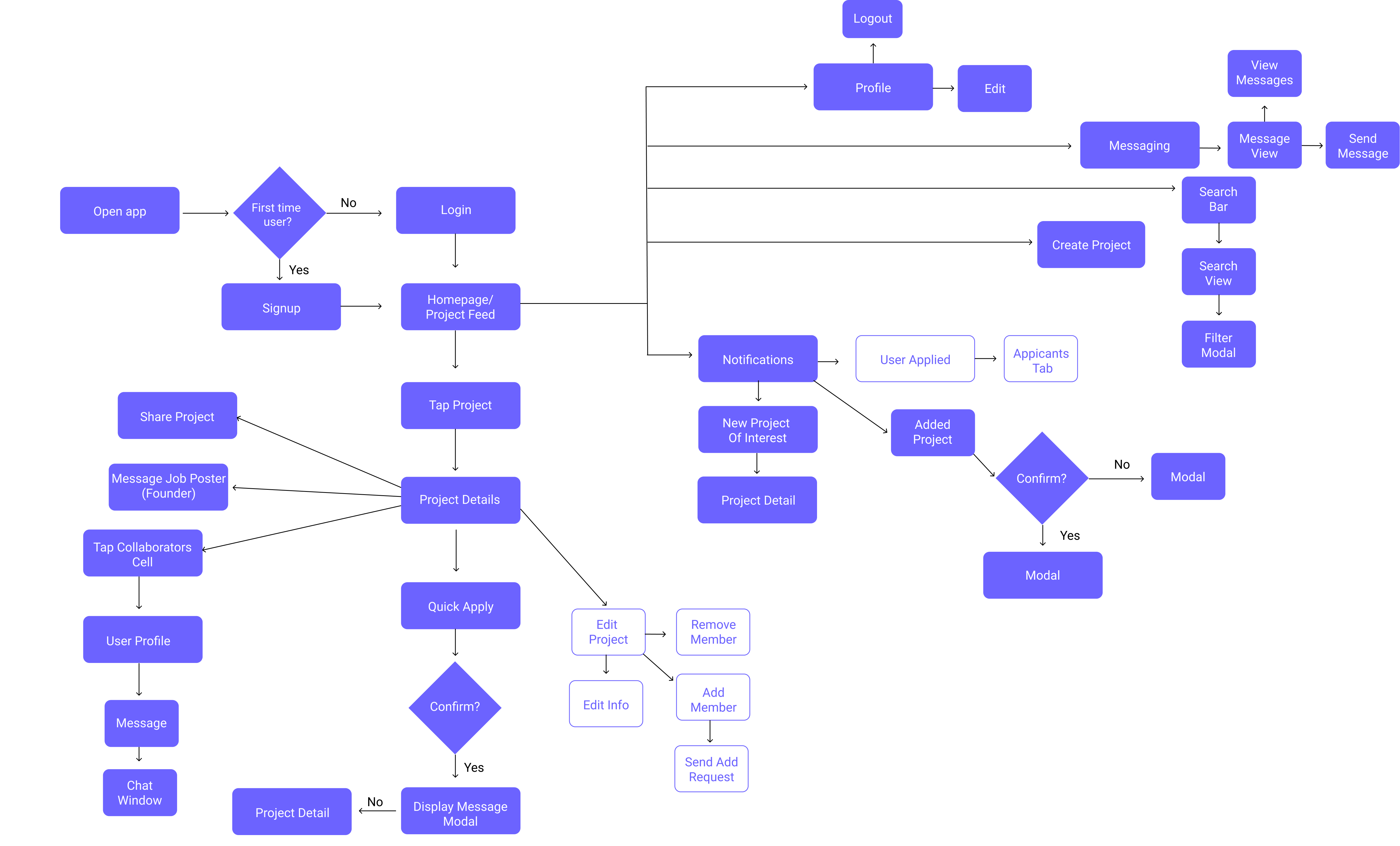
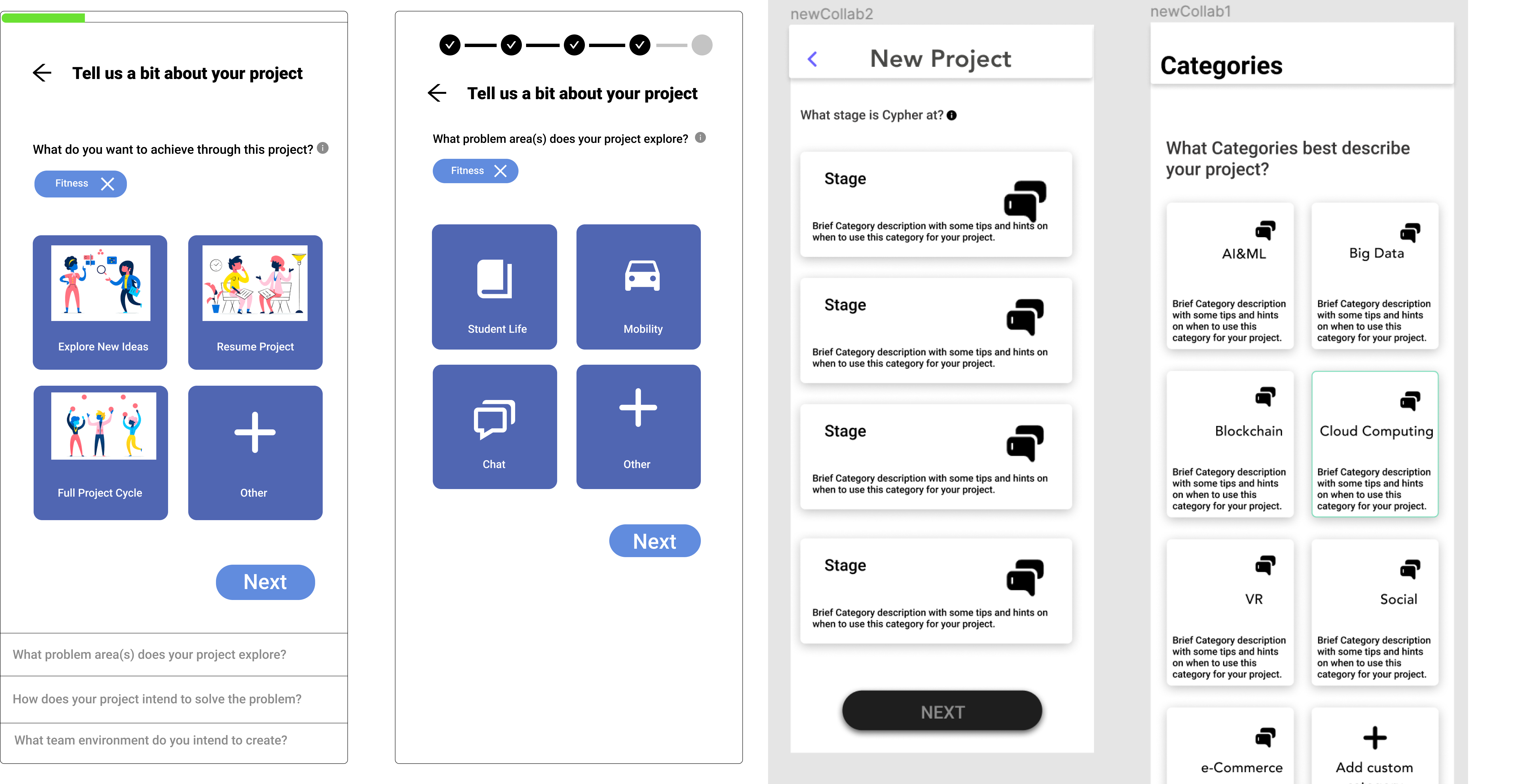
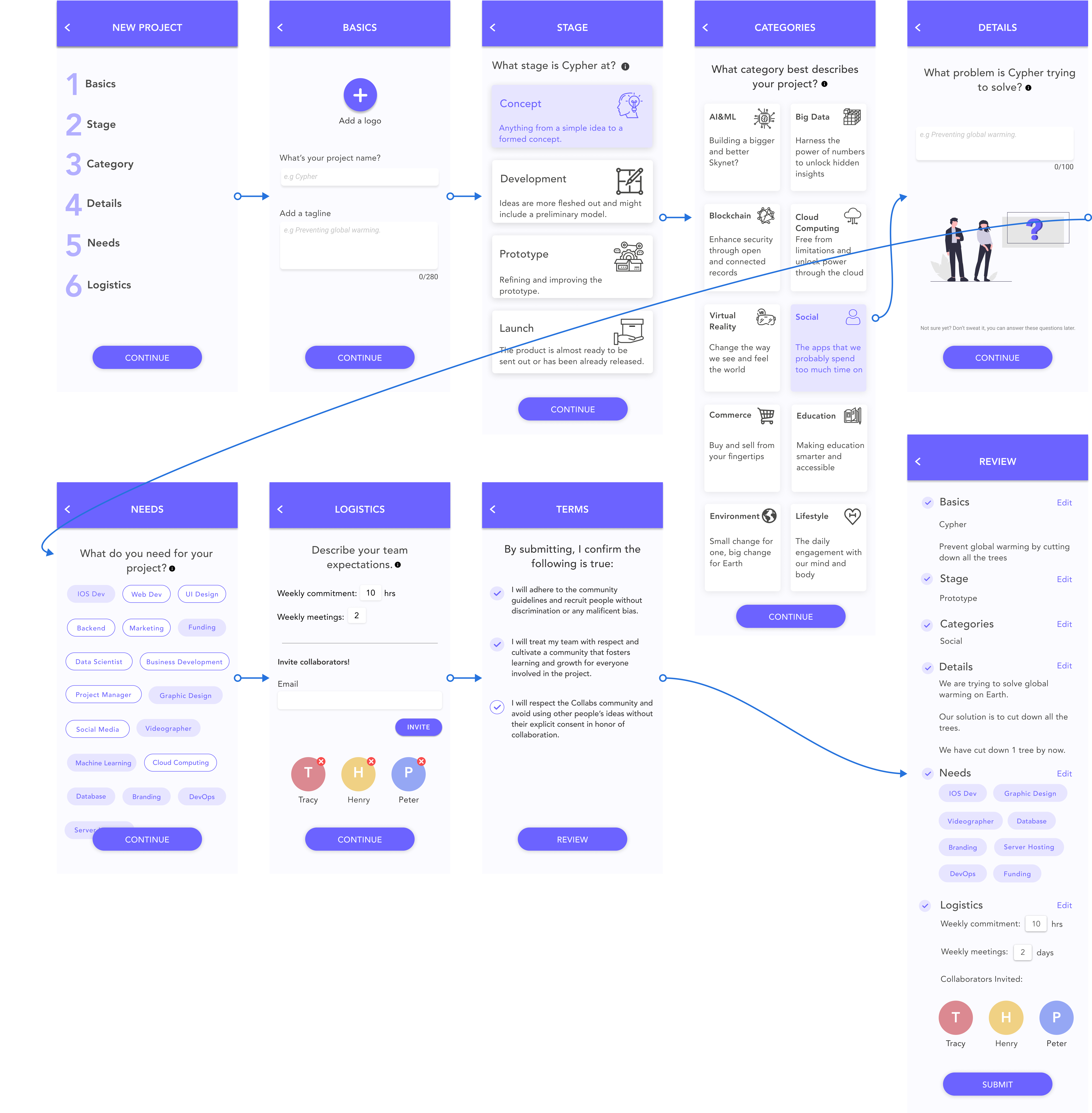
We mapped task flows for both user types, then worked low-to-high fidelity. Lo-fi started as crazy-eights followed by silos and weekly reviews. The mini design system locked in components early so the team of four could parallelize without diverging.
User testing the core flow
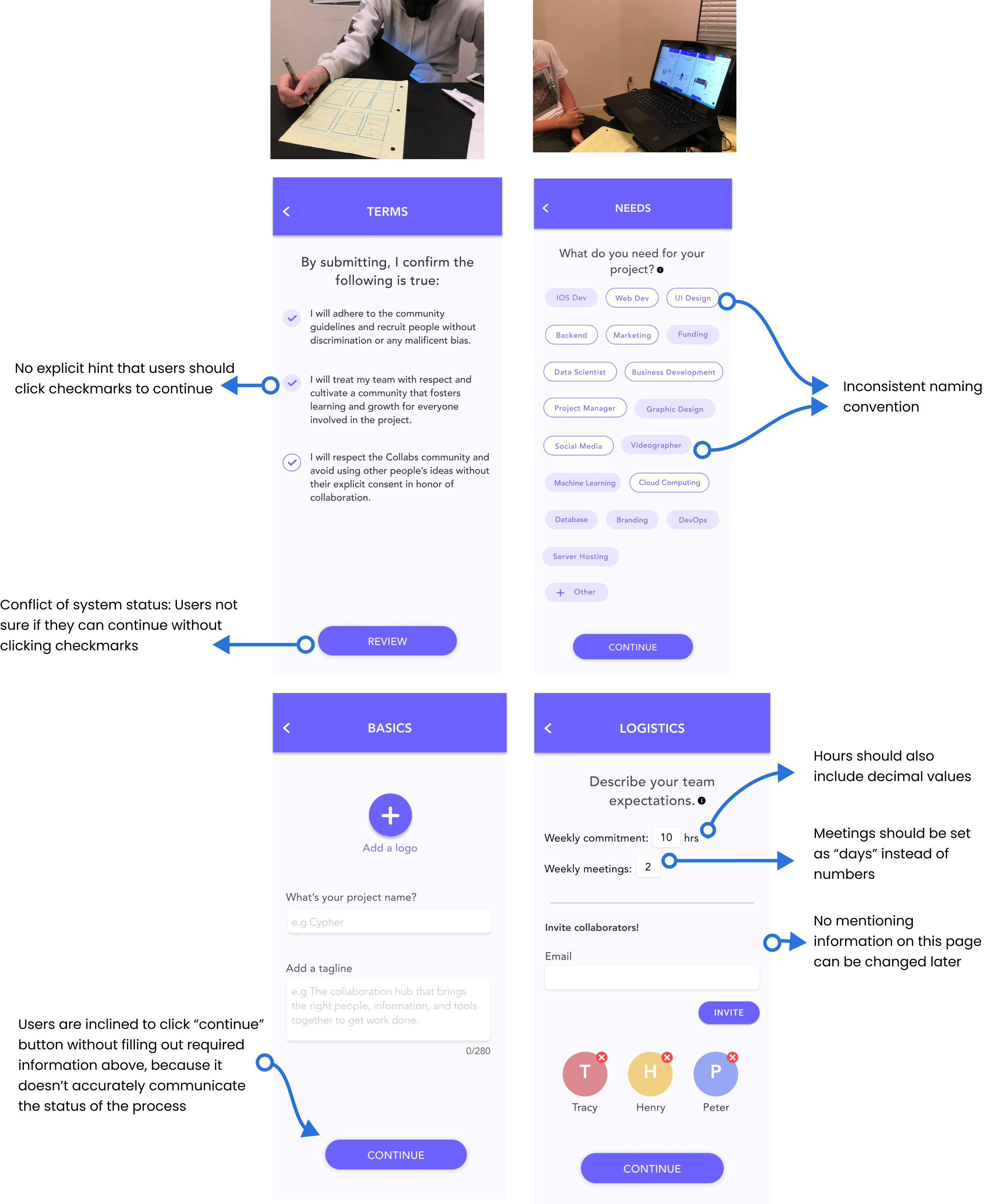
We hi-fi-prototyped the project creation flow and tested it on the device to surface friction in the moments that mattered most.
What shipped
Collabs launched to the App Store on May 13, 2020 — V1 with the full seeker flow, the creator companion experience, and the design system underpinning both. The product was short-lived after team members graduated and the pandemic disrupted hiring patterns, but the design infrastructure is what I carry forward from this project.
Reflection
Collabs is the project where I learned that design leadership is mostly the absence of obvious chaos. The visible work — the screens, the prototypes, the launch — was a small fraction of what mattered. The bigger fraction was the unglamorous infrastructure: shared components, naming conventions, decision logs, design reviews on a cadence. Those are the things I now try to set up first on any new team.
What I'd change: I'd have introduced explicit success metrics earlier. The team had clear feature goals but fuzzy outcome goals, which made it harder to defend cuts when we needed to ship.