Case Study · Conversational AI · Origin
The 2019 chatbot that taught me how to design for AI.
TraitsAI was a conversational coaching app powered by crowdsourced AI — Alexa Answers crossed with life coaching. It was my first time designing an interface where the system's response wasn't fixed, and the lessons from it shape every AI surface I've built since.
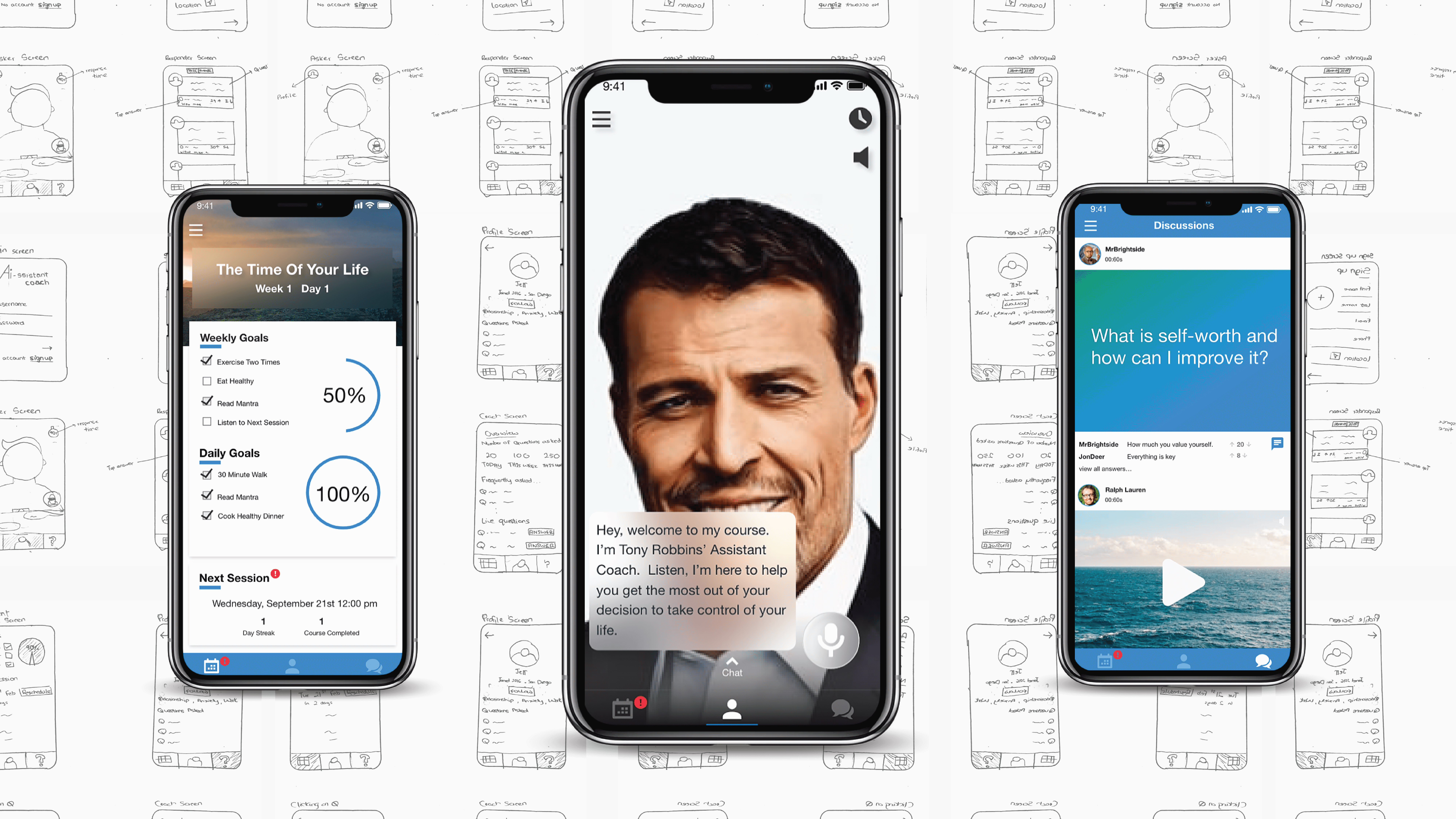
A note on framing: this was an internship in 2019 — pre-ChatGPT, pre-LLM mainstream. I include it because the design problems it raised (trust, voice, non-determinism, fallback states) turned out to be exactly the problems I work on now at Owaves. It's the origin of a through-line, not a recent flagship.
Context
Life coaching is a face-to-face industry that doesn't scale. Coaches with 30 clients spend half their time chasing task completion, the other half delivering near-identical advice over and over. TraitsAI's bet was that a conversational AI trained on a coach's voice could absorb the repetitive coaching layer, letting human coaches scale without losing their personal connection.
The technical pitch was crowdsourced AI — workers training the model on a famous coach's voice (Tony Robbins, in our test case). My job was to design the app — chatbot, task tracking, course discovery — and figure out what a "Tony Robbins in your pocket" interface should feel like.
The hard call
The single hardest design question wasn't UI — it was voice. If the chatbot read like a generic life-coach script, it had no value over an existing app. If it tried to imitate Tony Robbins and got it wrong, it broke the illusion and damaged trust. There was no good middle.
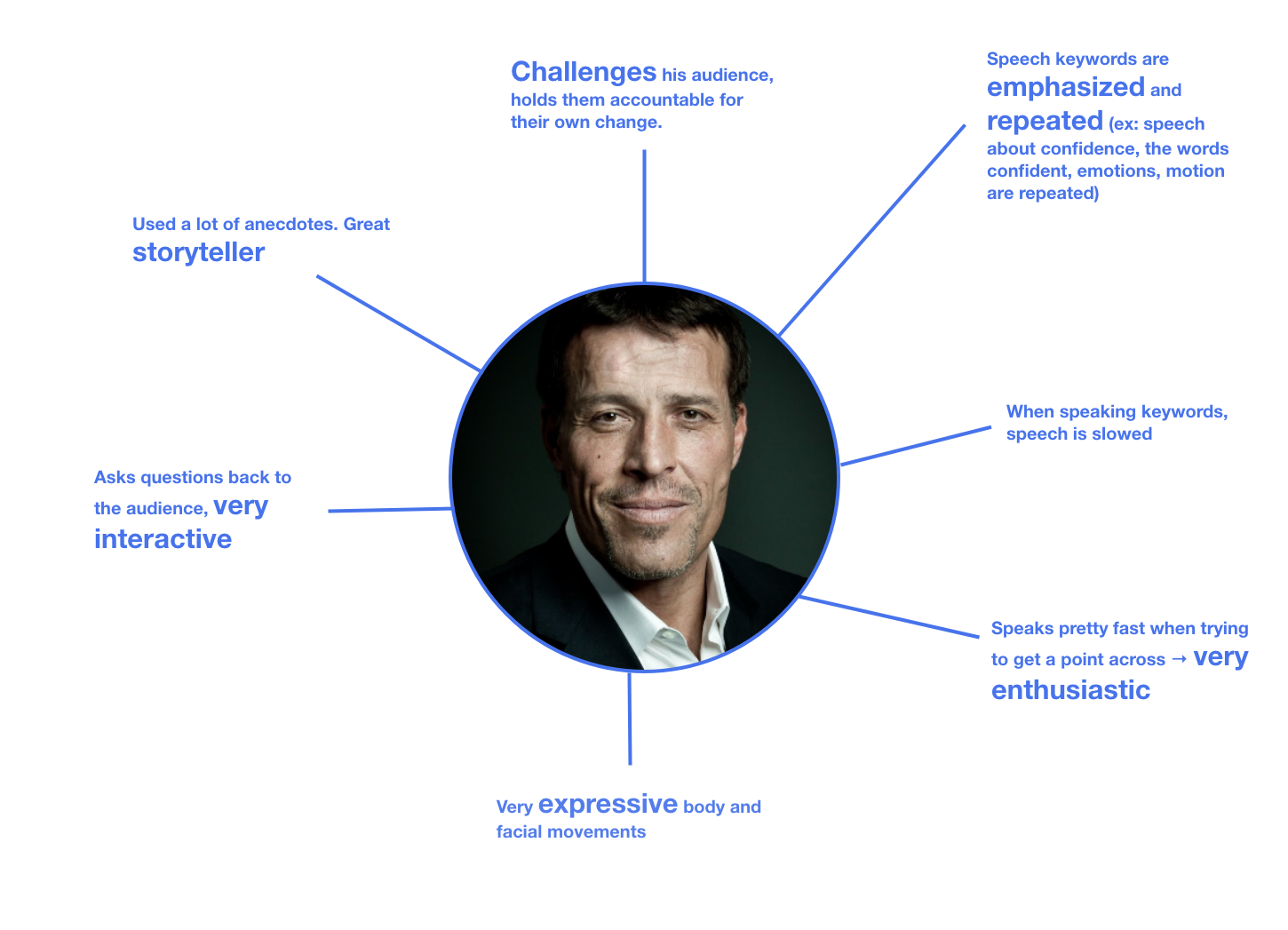
I treated the chatbot as a character to be designed, not a feature to be specified. The team and I watched dozens of hours of Tony Robbins material to extract recurring rhetorical patterns, opener phrases, and the cadence of his pep-talk arc — then we wrote a script that approximated those patterns rather than imitating his exact words.
This is, in retrospect, the same instinct that today underpins persona-based system prompts in LLM applications. We were doing it manually, by hand, in 2019.
What the project actually taught me
Three lessons surfaced that I now apply directly to AI work at Owaves:
- Voice is a UX surface. The wording of an AI response is a design decision with the weight of a screen. It deserves prototyping, testing, and iteration — not a copywriter pass after the fact.
- You design for the failure case first. When the AI couldn't answer, the script had to fail in a way that preserved the character. We mapped fallback responses for every category of unanswerable question. That habit — designing for "I don't know" before designing for "I know" — is the single most important AI design discipline I learned here.
- Wizard-of-Oz beats spec docs. Because the underlying tech wasn't ready, we tested with a chatbot wired to a human-written script. It taught us more about what users wanted from the AI than any number of design reviews could have. I still use this technique now.
Mapping Tony's voice
Before we wrote a single line of chatbot script, we mapped recurring patterns in Tony Robbins's actual speech — opener phrases, framing devices, rhetorical loops. The word map below is the artifact that came out of that exercise; it became the source-of-truth for every chatbot response we wrote.
What shipped
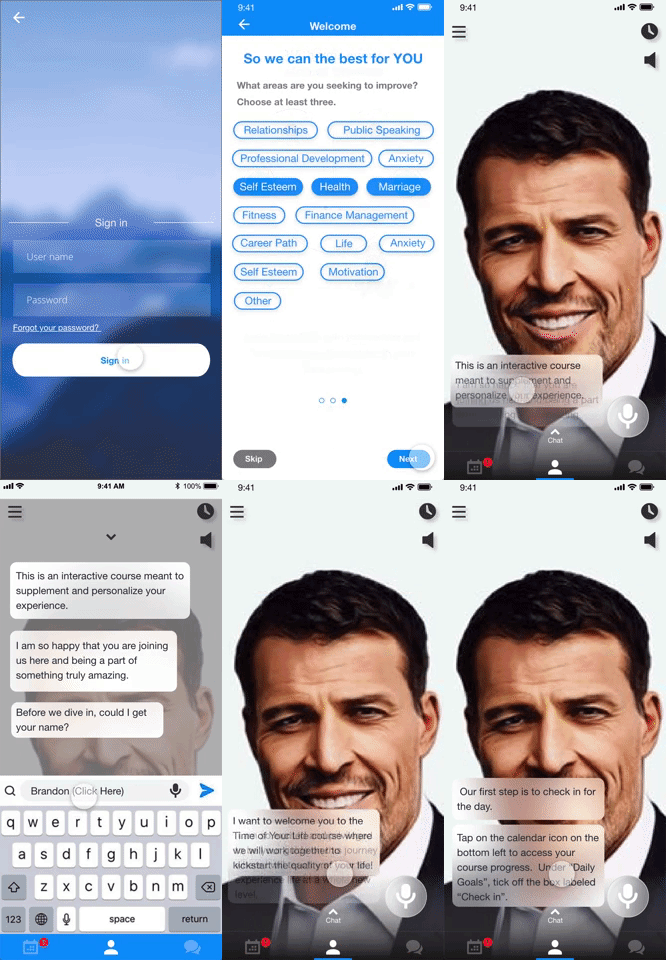
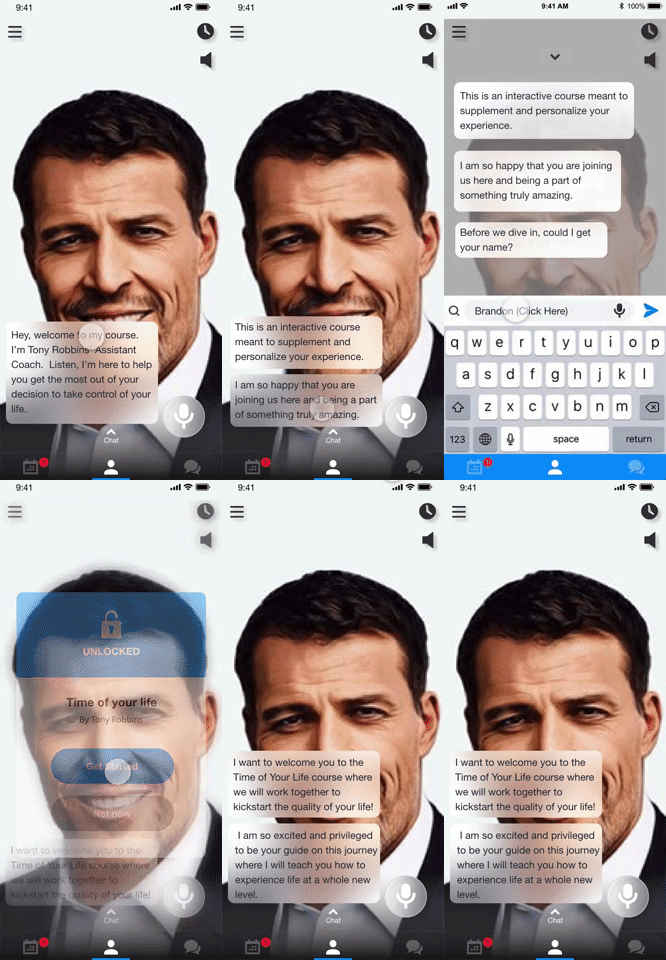
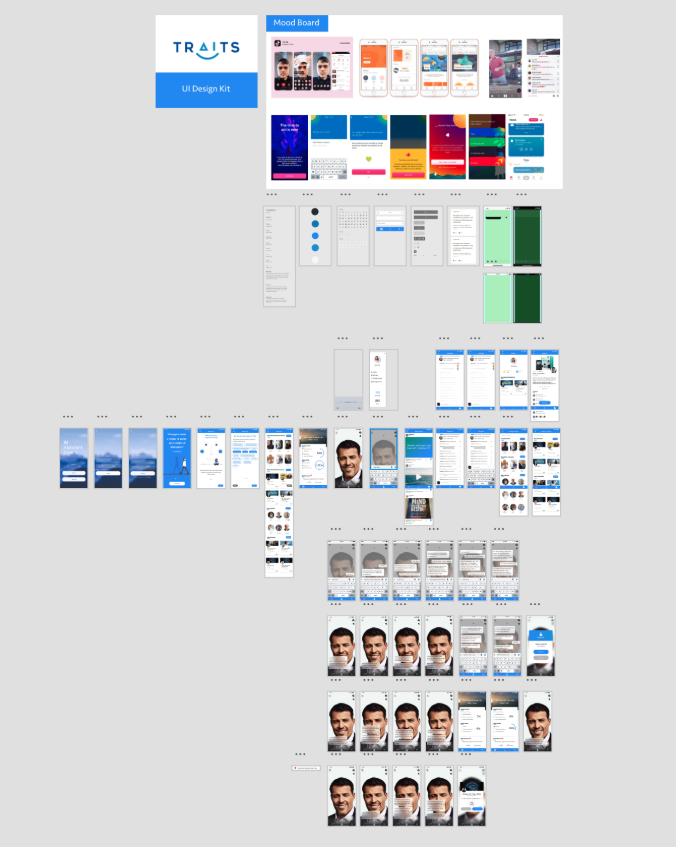
A high-fidelity Adobe XD prototype with the chatbot, a task tracker, course discovery, and a complete design system. The deliverable to the engineering team included the design spec, conversational flowmaps, fallback response library, and the script that the chatbot ran during testing.
Reflection
Looking back from 2026, TraitsAI is the project that quietly shaped my career trajectory toward AI. At the time it felt like a chatbot project; in hindsight it was a crash course in every design problem that LLM-based products would surface five years later — voice, fallbacks, expectation-setting, the limits of imitation. The technology has changed enormously. The design questions haven't.